As we welcome the New Year 2026, it is a timely moment to reflect on cultural traditions and the values they carry. In many highland communities, New Year festivals are deeply connected to identity, community life, and a sense of belonging, making them especially important when discussing tourism and sustainable development.
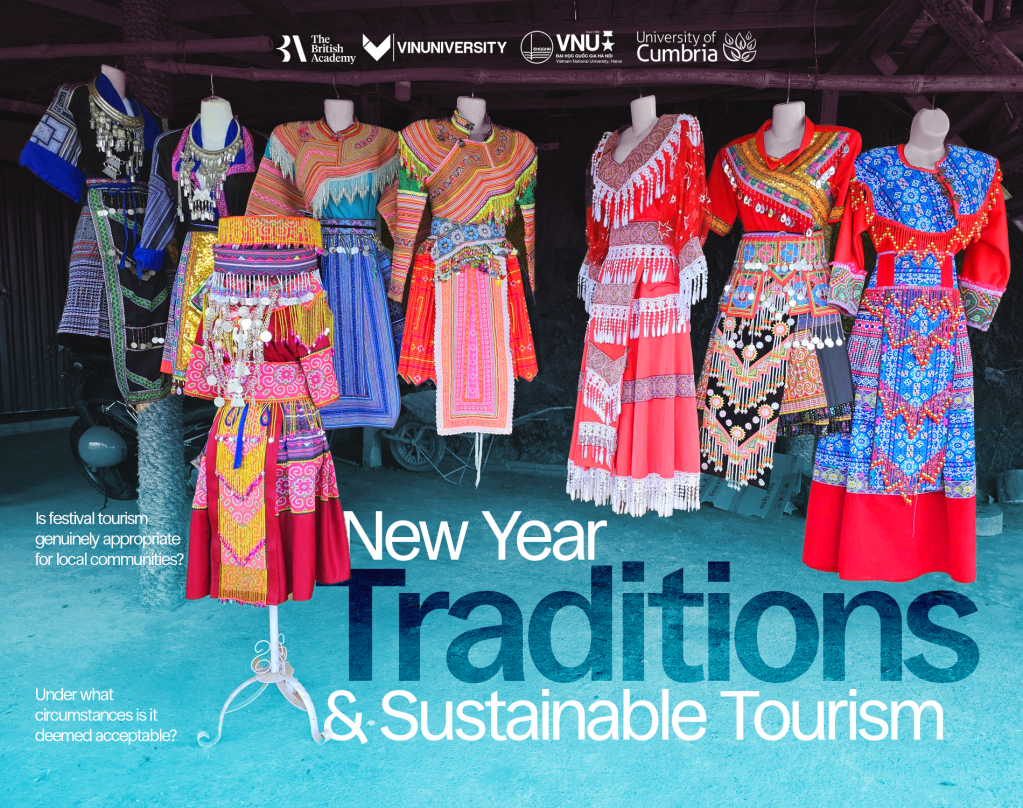
A tourism study published in 2023 (Zhang & Dai, 2023), conducted in Leishan County, China, examines how the Hmong New Year has gradually become a focal attraction of tourism development in a highland context. Local communities often celebrate the Traditional New Year over several days, sometimes extending into weeks, as they mark the transition from one year to the next. More than a festival, it is a time to honor ancestors, visit relatives and neighbors, renew social bonds, and reaffirm a shared sense of community.
The growth of highland tourism has turned the Hmong New Year in Leishan into a major cultural event, attracting millions of visitors and boosting village income. However, the study extends its analysis beyond economic indicators by addressing critical questions: Is festival tourism genuinely appropriate for local communities? Under what circumstances is it deemed acceptable?
Instead of focusing only on revenue, the researchers highlight two key ideas: (1) festival attachment, or villagers’ emotional bond with the New Year as part of their culture, and (2) trust in local governance, meaning confidence that local authorities protect cultural values during tourism development.
The research shows that when local communities see their New Year customs being honoured and are included openly in decisions about festival tourism, their view of tourism changes. Rather than feeling uncertain or detached, they begin to accept tourism as a positive opportunity.
This research offers important reflections for highland tourism in many other regions where New Year traditions and festivals have long been central to the spiritual, social, and cultural life of local communities. In such contexts, developing festival-based tourism should not only ask “How many tourists can be attracted?” but also “Who has the right to tell cultural stories?” and “Do communities still feel a sense of belonging to their own cultural practices?”
_
[1] Zhang, J., & Dai, G. (2023). Political Trust and Festival Attachment: Influencing Residents’ Engagement in Traditional Festivals. Behavioral Sciences, 13(9), 741. https://doi.org/10.3390/bs13090741
 Vietnam Outdoor Tourism Research