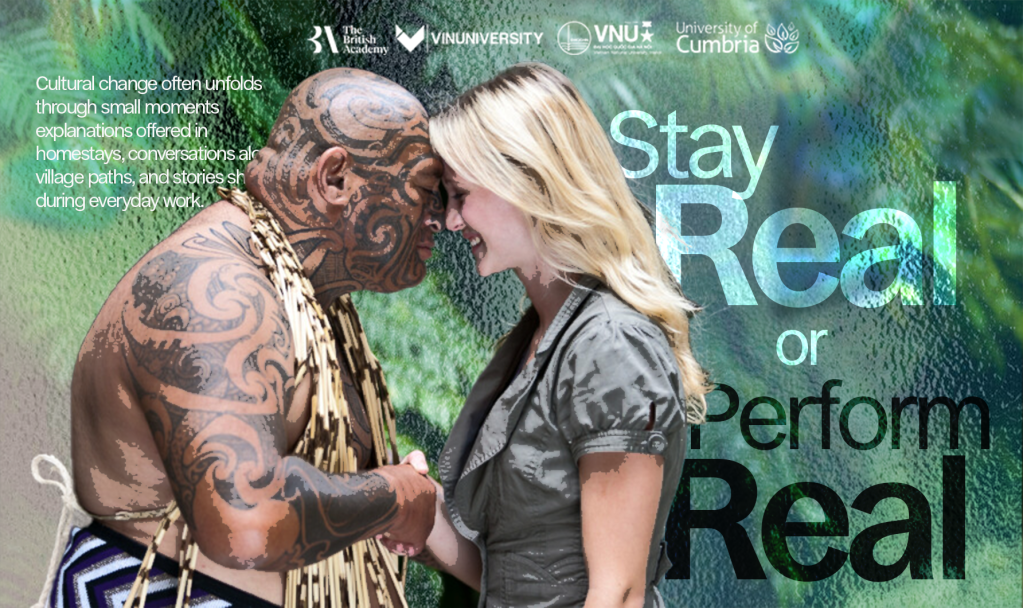
Tourism in ethnic minority regions is often discussed through large ideas such as preservation, development, or cultural change. Alexis Celeste Bunten’s ethnographic research approaches tourism through everyday encounters, paying attention to how meaning is produced through ordinary interactions between Indigenous tour guides and visitors.
Based on more-than-a-decade fieldwork with Alaska Native and Māori guides, the article follows moments that often pass unnoticed — greetings at the start of a tour, casual jokes, brief explanations, and comments made in passing. Through these encounters, culture takes shape as something practiced and adjusted in real time.
1️⃣ Being “looked at”
At the beginning of a tour, guides become aware of how they are seen.
Visitors arrive with ideas formed through travel brochures, museums, films, and earlier journeys. These ideas influence the questions they ask, the moments they photograph, and the details that attract their attention.
Guides quickly learn to recognize these expectations. Over time, they develop a sensitivity to how their appearance, speech, and movement are interpreted during the tour.
2️⃣ Identity as part of the tour
For Indigenous guides, personal presence forms part of the tour experience.
Voice, humour, and biography shape how stories are told. Over time, guides learn how different ways of speaking generate different responses from visitors.
Decisions about what to share and what to hold back emerge through experience. These choices are shaped by workplace training, community expectations, and personal comfort.
3️⃣ Resisting through humour
Humour appears frequently during tours.
In one example from Bunten’s fieldwork, an Alaska Native guide points to a house decorated with Indigenous designs and remarks that the man living there would “lose his Indian blood if he got a nosebleed.”
The comment produces laughter among visitors. At the same time, it introduces a reflection on belonging and community membership. Such moments allow guides to communicate layered meanings within the flow of the tour.
4️⃣ Culture in the present
During a forest tour, a Māori guide introduces the story of Tane Mahuta, a tree associated with ancestral origins. After telling the story, he mentions that he learned it during workplace training only weeks earlier.
This small detail situates cultural knowledge within contemporary institutions and ongoing learning. Tradition appears as something practiced and renewed through present-day contexts.
5️⃣Being a “modern” indigenous
Guides often include ordinary details in their storytelling.
They talk about checking weather forecasts, watching television, managing small businesses, or balancing tourism work with other jobs.
These references place Indigenous life firmly within the present. Daily routines sit alongside ceremonial stories within the same tour.
💡 Reflections for ethnic minority tourism in Vietnam
Bunten’s ethnography points to the position of tour guides as cultural brokers (Bunten, 2010). Across each tour, guides draw from community knowledge, professional training, and personal experience. These elements come together through conversation and movement. Culture emerges through these interactions as something carried forward through practice. Through repeated engagement with visitors, Alaska Native and Māori guides learn how tour narratives are expected to take shape and how meanings are commonly interpreted.
Presenting oneself as “the Other” develops as a situated practice. It is informed by familiarity with tourism environments, responsibility toward community, and experience accumulated over time. Attention to these processes helps illuminate tourism as a form of cross-cultural encounter in which interaction itself becomes organized and exchanged.
This perspective offers useful insights for understanding ethnic minority tourism in Vietnam’s northern highlands.
Cultural change often unfolds through small moments — explanations offered in homestays, conversations along village paths, and stories shared during everyday work. Observing these interactions allows culture to be understood as something lived, interpreted, and sustained through ongoing practice.
_
Author: Lâm Huy
Photo Credit: @100% Pure New Zealand
References: BUNTEN, A. C. (2010). Indigenous tourism: the paradox of gaze and resistance. La Ricerca Folklorica, 61, 51–59. http://www.jstor.org/stable/41548467
_
Vietnam Outdoor Tourism Research Project
💌Email: vietnamoutdoorresearch@gmail.com
🌐Website: https://vnort.com/
 Vietnam Outdoor Tourism Research