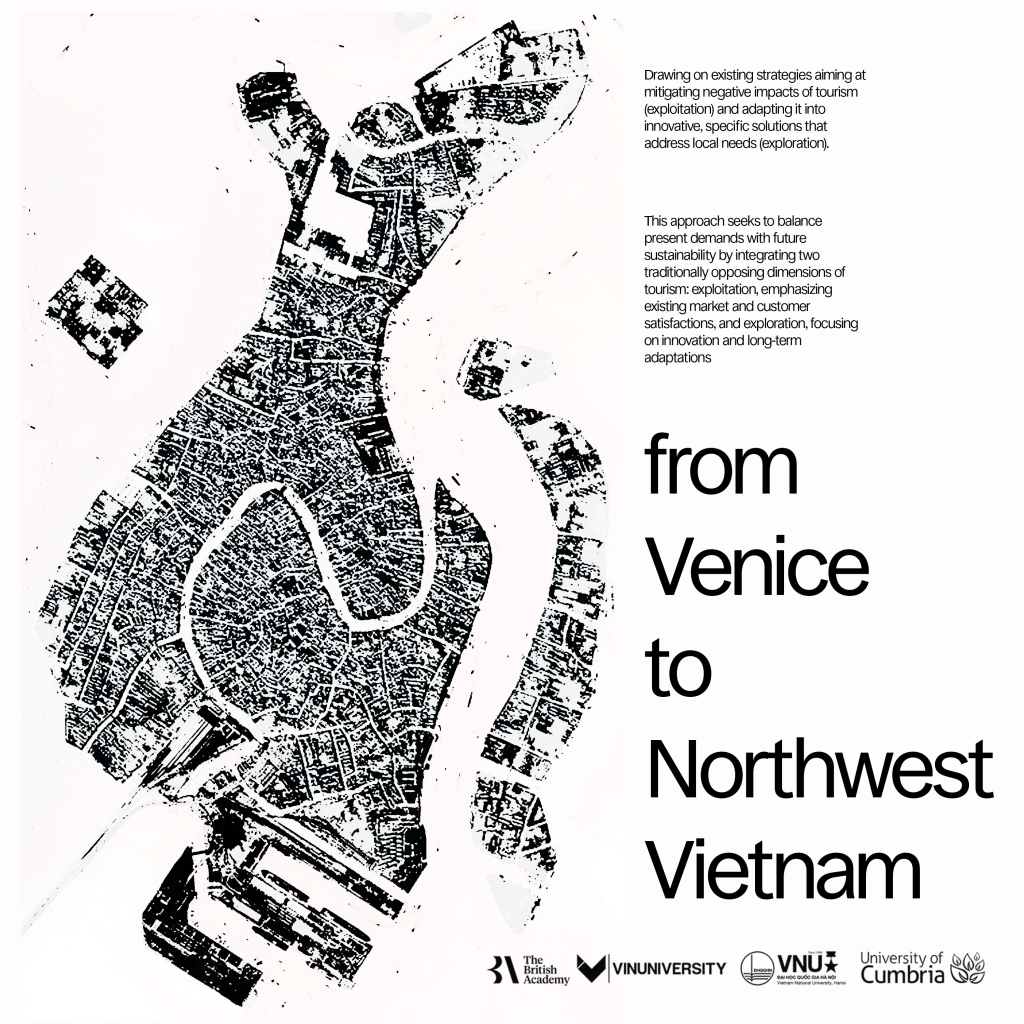
Nearly 40 cities in Northern Europe claimed themselves as the “Venice in the North”. This designation has highlighted the exceptional symbolic and cultural status of this City of Canals. As a medium-sized heritage European city, Venice humbled many other destinations by receiving nearly 6 million visits in 2024 (Statista Research Department, 2025), equivalent to an average of more than 16 thousands visits per day.
This strong pressure has placed a significant strain on the carrying capacity of the city, leading to visible social, economic, and environmental consequences. Many locals lost their sense of belonging and sense of place (Seraphin, 2018, p.2) Richardson (2017, p.47, as cited in Seraphin 2018) noted that Venice’s local population had declined by two thirds for the last 50 years whereas tourist numbers keep swelling. The city has also experienced growing congestion, privatization of public spaces, and intensified real estate speculation. Furthermore, the city’s environmental sustainability is under constant threat from climate change, including rising sea levels, flooding, and subsidence (Anzidei et al., 2025) Together, these dynamics reflect a state of overtourism that has the potential to erode the city’s cultural and heritage values.
One possible proposed solution to overtourism is the concept of Ambidextrous management, introduced by Seraphi et al. (2018). This approach seeks to balance present demands with future sustainability by integrating two traditionally opposing dimensions of tourism: exploitation, emphasizing existing market and customer satisfactions, and exploration, focusing on innovation and long-term adaptations. By combining these dimensions, ambidextrous management aims to align multiple stakeholders around a shared objective, thereby supporting a sustainable and economically viable tourism.
In the context of Venice, it involves drawing on existing strategies aiming at mitigating negative impacts of tourism (exploitation) and adapting it into innovative, specific solutions that address local needs (exploration).
The effectiveness of the ambidextrous approach has been tested in couples of contexts. One illustrative example is the Royal Caribbean International’s Labadee resort in Haiti. By granting local Haitian vendors access to exchange souvenirs in the resort on a payment fee, the company has reportedly strengthened its relationship with the host community (Seraphin, 2018, p. 1).
Turning to the Northwest of Vietnam, many emerging tourist hotspots are beginning to face similar risks of overtourism, affecting local populations, land use, and cultural practices. The case of Venice and the application of ambidextrous management approach therefore offered a new pathway to addressing and mitigating overtourism in these areas of Vietnam.
#VeniceInTheNorth #Overtourism #CityOfCanals #SustainableTourism #HeritageAtRisk #AmbidextrousManagement #TourismInnovation #FutureOfTravel #DuLichBenVung #QuaTaiDuLich #BaoTonDiSan #ThanhPhoDiSan #CanBangPhatTrien #DuLichCoTrachNhiem #HocTuVenice #VietNamTourism
_
Author: Gia Bao
Photo Credit: Venice map by TripMemos
_
References:
Anzidei, M., Tolomei, C., Trippanera, D., Alberti, T., Bosman, A., Brunori, C. A., Serpelloni, E., Vecchio, A., Falciano, A., & Deli, G. (2025). Multi-Temporal Relative Sea Level Rise Scenarios up to 2150 for the Venice Lagoon (Italy). Remote Sensing, 17(5), 820. https://doi.org/10.3390/rs17050820
Seraphin, H., Sheeran, P., & Pilato, M. (2018). Over-tourism and the fall of Venice as a destination. Journal of Destination Marketing & Management, 9, 374–376. https://doi.org/10.1016/j.jdmm.2018.01.011
Statista Research Department, Topic: Tourism in Venice. (2025, December 17). Statista. https://www.statista.com/topics/5979/tourism-in-venice/
_
Vietnam Outdoor Tourism Research Project
💌Email: vietnamoutdoorresearch@gmail.com
🌐Website: https://vnort.com/
 Vietnam Outdoor Tourism Research