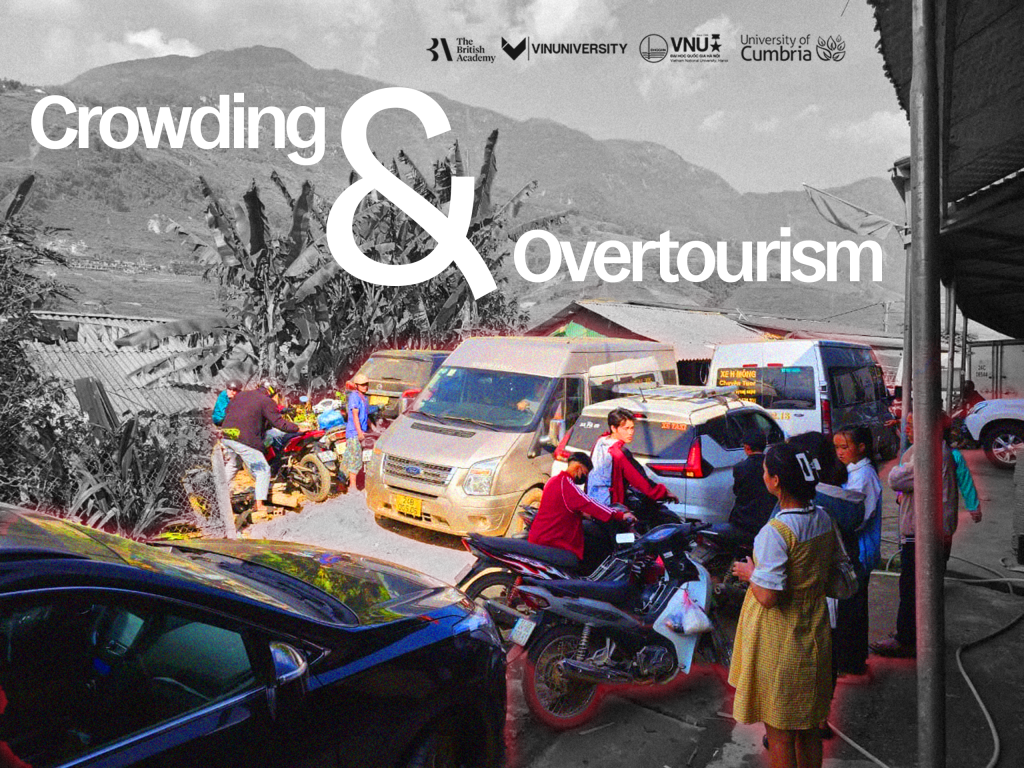
Crowding refers to a negative evaluation of the density of visitors in a space, which can lead to feelings of discomfort or reduced enjoyment (Fefer et al., 2024; Manning et al., 2013). In tourism, crowding is often a subjective experience influenced by factors like individual expectations, cultural differences, past experiences, and the type of activity undertaken (i.e. trekking, paragliding, swimming, workshops, etc.). For example, one person’s view of a “crowded” trekking route may differ from another’s based on numerous factors. Overtourism refers to when the number of people present exceeds what an individual or group finds acceptable, impacting their experience and potentially leading to negative feelings or behavioral adaptations. While tourism can provide many economic benefits to agencies and locals, overtourism may interrupt daily life or have negative environmental impacts (i.e. congestion and erosion). In response to crowding, individuals often adapt their preferences such as what activity they choose, time of day they visit an area, or which season they choose to visit. In extreme cases of overtourism, people may avoid certain areas or permanently leave and never return (Miller & McCool, 2003; Rice et al., 2019).
In recent years, Sa Pa (pictured below) has experienced a mass influx of new tourist visitation and activity. This increased tourism does provide many economic benefits and new industries in a once fairly isolated area are thriving. With the rise of tourism in Vietnam and a goal of 25 million new foreign visitors in 2026, tourism “hotspots” need to pay close attention to factors such as crowding. These factors play an important part in long term sustainable tourism and a balancing act that takes into account factors such as seasonality in tourism, economic development, roadway construction, environmental factors, cultural preservation, locals view, among many others.
As we move forward with this research project, we ask:
- How can Vietnam tourism include more sustainable practices?
- Can we explore a more holistic view of tourism beyond only human experience?
- What are the environmental, social, and behavioral impacts of tourism?
- How can we create more equitable consideration of local interests and perspectives?
#SustainableTourism #HighlandCulture #LivingHeritage #ResponsibleTravel #EcoTourism #CommunityBasedTourism #CulturalHeritage #TravelWithPurpose #DuLichBenVung #VanHoaVungCao #DuLichTrachNhiem #DuLichSinhThai #DuLichCongDong #BaoTonVanHoa #DiSanSong #TraiNghiemBanDia #DuLichXanh
_
Author: Myles Lynch
Photo Credit: Sa Pa roadway – Photo taken by Myles Lynch
_
References:
Fefer, J. P., Hallo, J. C., Collins, R. H., Baldwin, E. D., & Brownlee, M. T. (2024). From displaced to misplaced: Exploring the experience of visitors who were ‘crowded out’of their recreation destination. Leisure Sciences, 46(1), 1-20.
Manning, R. (2013). Parks and carrying capacity: Commons without tragedy. Island Press.
Miller, T., & McCool, S. (2003). Coping with stress in outdoor recreational settings: An application of transactional stress theory. Leisure Sciences, 25(2–3), 257–275. https://doi.org/10.1080/01490400306562
Rice, W. L., Taff, B. D., Newman, P. B., Miller, Z. D., D’Antonio, A. L., Baker, J. T., Monz, C.,
Newton, J. N., & Zipp, K. Y. (2019). Grand Expectations: Understanding Visitor Motivations
and Outcome Interference in Grand Teton National Park. The Journal of Park and Recreation
Administration, 37(2), 26–44. https://doi.org/10.18666/JPRA-2019-9283
_
Vietnam Outdoor Tourism Research Project
💌Email: vietnamoutdoorresearch@gmail.com
🌐Website: https://vnort.com/
 Vietnam Outdoor Tourism Research