Ecotourism is defined as responsible travel to natural areas that conserves the environment, sustains the well-being of local communities, and incorporates interpretation and education (TIES, 2015). Therefore, ecotourism and conservation sectors, when effectively integrated, their operations can mutually reinforce one another’s success (Buckley, 2010). Moreover, according to McCool (2009), in many protected areas today, ecotourism serves as a vital financial mechanism, supporting conservation initiatives while contributing to local socio-economic development.
Because ecotourism activities directly affect local communities and their social development, planning processes should actively incorporate local perspectives. Nevertheless, research conducted by Bello et al. (2015) in Liwonde National Park and Majete Wildlife Reserve in Malawi identified several significant barriers to community participation in ecotourism and conservation planning. These include apathy among local residents, limited financial resources, insufficient access to information, moderate levels of formal education, inequitable distribution of benefits, lack of trained human resources, centralized governance structures, poor coordination among stakeholders, and ongoing human–wildlife conflicts.
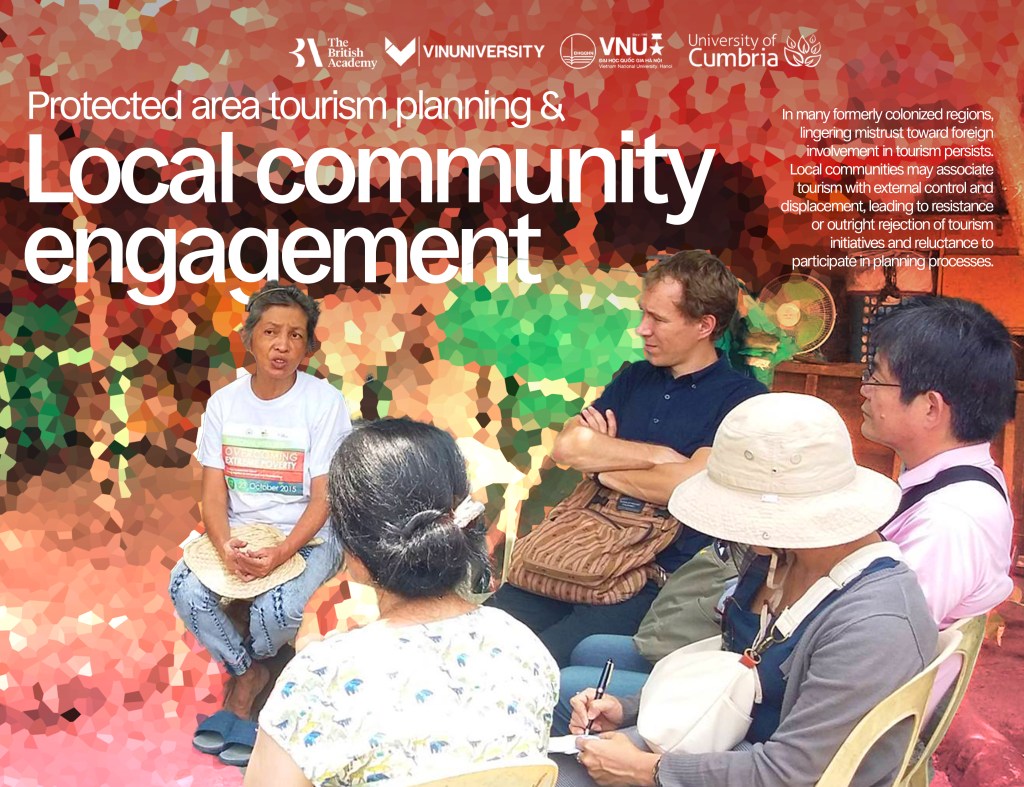
Similarly, a systematic literature review by Reindrawati (2023), synthesizing studies from 2018 to 2022, categorizes these barriers into three main groups: operational, structural, and cultural. While the findings largely align with earlier research, Reindrawati highlights an additional critical factor – the historical colonialism. In many formerly colonized regions, lingering mistrust toward foreign involvement in tourism persists. Local communities may associate tourism with external control and displacement, leading to resistance or outright rejection of tourism initiatives and reluctance to participate in planning processes.
Understanding these barriers is essential for policymakers and other high-level stakeholders seeking to foster meaningful community engagement in conservation and ecotourism planning. Greater community participation is strongly associated with more positive attitudes toward tourism development, which in turn supports the sustainability and success of the industry (Reindrawati, 2023). Conversely, when local perspectives are excluded, resentment and conflict may emerge, ultimately undermining tourism development (Zhang et al., 2006).
To address these challenges, tourism stakeholders in developing countries must actively promote inclusive participation. This can be achieved by simplifying bureaucratic processes, improving access to information, and ensuring transparency. Additionally, involving non-governmental organizations (NGOs) as intermediaries can help bridge communication gaps between communities and decision-makers. Providing financial support, fostering a sense of local ownership over tourism initiatives, and raising awareness of sustainable tourism practices are also critical steps toward enhancing community engagement and achieving long-term success in ecotourism development.
#VietnamTourism #CommunityEngagement #TourismPlanning #EthnicMinorities
_
Author: Thuy Duong (Jenny)
Photo credit: ATD Fourth World Philippines
References:
Bello, F. G., Lovelock, B., & Carr, N. (2017). Constraints of community participation in protected area-based tourism planning: The case of Malawi. Journal of Ecotourism, 16(2), 131-151.
Buckley, R. (2010). Conservation tourism. Cambridge, MA: CAB International.
Reindrawati, D. Y. (2023). Challenges of community participation in tourism planning in developing countries. Cogent Social Sciences, 9(1), 2164240.
The International Ecotourism Society. (2015). What is Ecotourism? The International Ecotourism Society. https://ecotourism.org/what-is-ecotourism/
McCool, S. F. (2009). Constructing partnerships for protected area tourism planning in an era of change and messiness. Journal of Sustainable Tourism, 17(2), 133–148.
Zhang, J., Inbakaran, R. J., & Jackson, M. S. (2006). Understanding community attitudes towards tourism and host—Guest interaction in the urban—rural border region. Tourism Geographies, 8(2), 182–204. https://doi.org/10.1080/14616680600585455
_
Vietnam Outdoor Tourism Research Project
💌Email: vietnamoutdoorresearch@gmail.com
🌐Website: https://vnort.com/
 Vietnam Outdoor Tourism Research